


Why a single prompt is not a visibility score
Generated answers are variable. Models, web results and ranking systems change, so asking one question once can produce a misleading conclusion. The measurement unit should be a question set, not a screenshot.
Ranki.ai keeps buyer questions stable across runs and groups them into topic clusters. This makes it possible to compare today with yesterday or last week without silently changing the test itself.
The four signals worth separating
A brand can be visible without being recommended, and recommended without its website being cited. Treating all three as one score hides the difference between awareness and source authority.
- Mention rate: percentage of successful answers that name the brand.
- Recommendation rate: percentage that recommend the brand for the buyer need.
- Citation rate: percentage that cite the brand domain as a source.
- Recommendation position: where the brand appears when the answer provides a ranked shortlist.
Use unbranded buyer questions
Questions such as “is Ranki.ai good?” measure brand lookup, not discovery. A GEO measurement set should contain unbranded questions that a real prospect could ask before knowing the company exists. That is where competitor visibility matters.
Examples include best-tool, how-to, alternative, comparison and workflow questions. The exact set should match the business model and stay stable long enough to reveal a trend.
Connect AI visibility to search and business outcomes
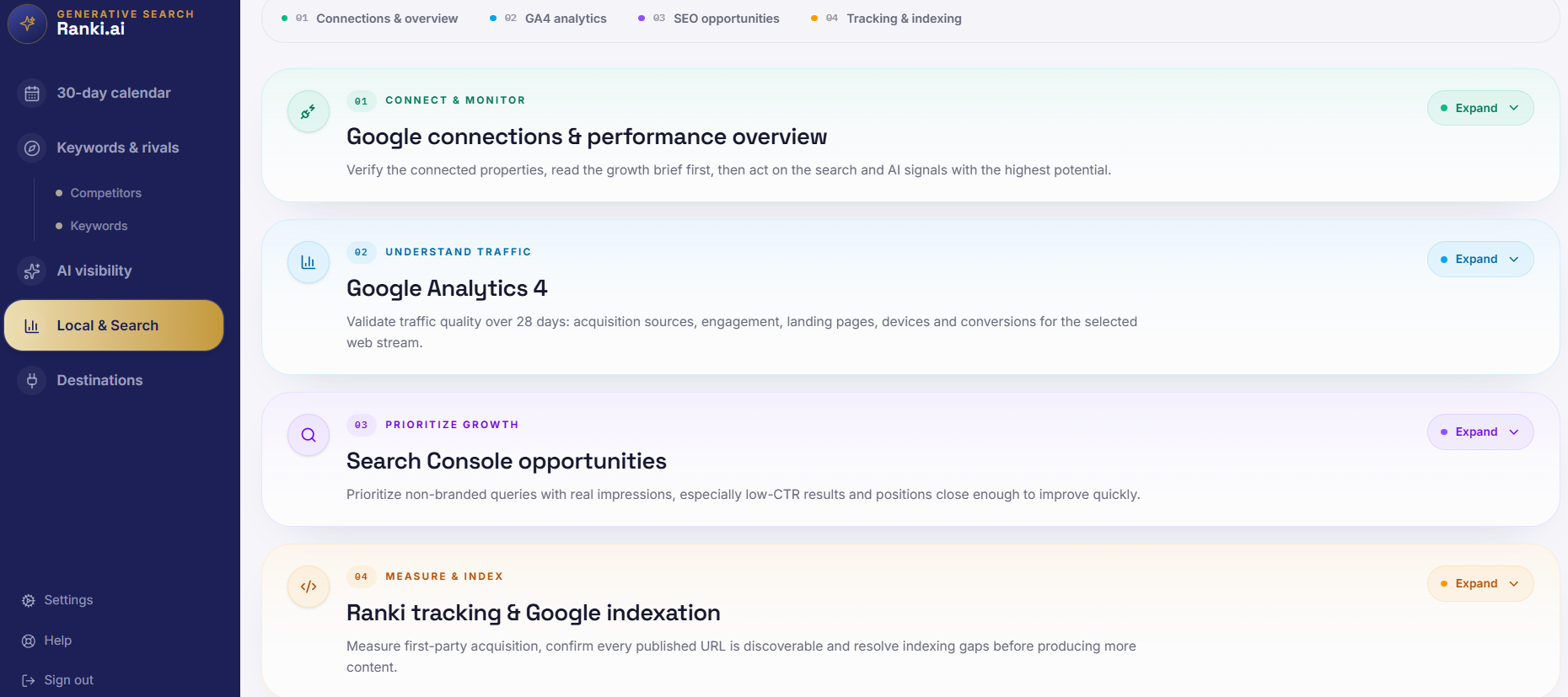
AI visibility is not revenue. It becomes more useful when viewed next to Search Console impressions and clicks, analytics sessions and conversions. Ranki.ai keeps these sources distinct while presenting them in the same growth workflow so a team can see whether visibility is translating into discoverability and traffic.
Frequently asked questions
How often should AI visibility be measured?
Daily measurement is useful for active programs when the question set stays stable. Weekly can be enough for slower-moving categories. The key is consistency, not maximum frequency.
Should branded questions count in the main visibility rate?
Usually no. Branded questions answer a different question: whether an engine knows the brand. Discovery visibility is better measured with unbranded buyer questions.
Is an AI citation the same as a Google backlink?
No. An AI citation is a source reference in a generated answer. It may drive traffic and authority signals for users, but it should not be treated as a traditional backlink metric.
Ranki.ai · GEO + SEO + AEO on autopilot
Turn the strategy into a 30-day execution plan
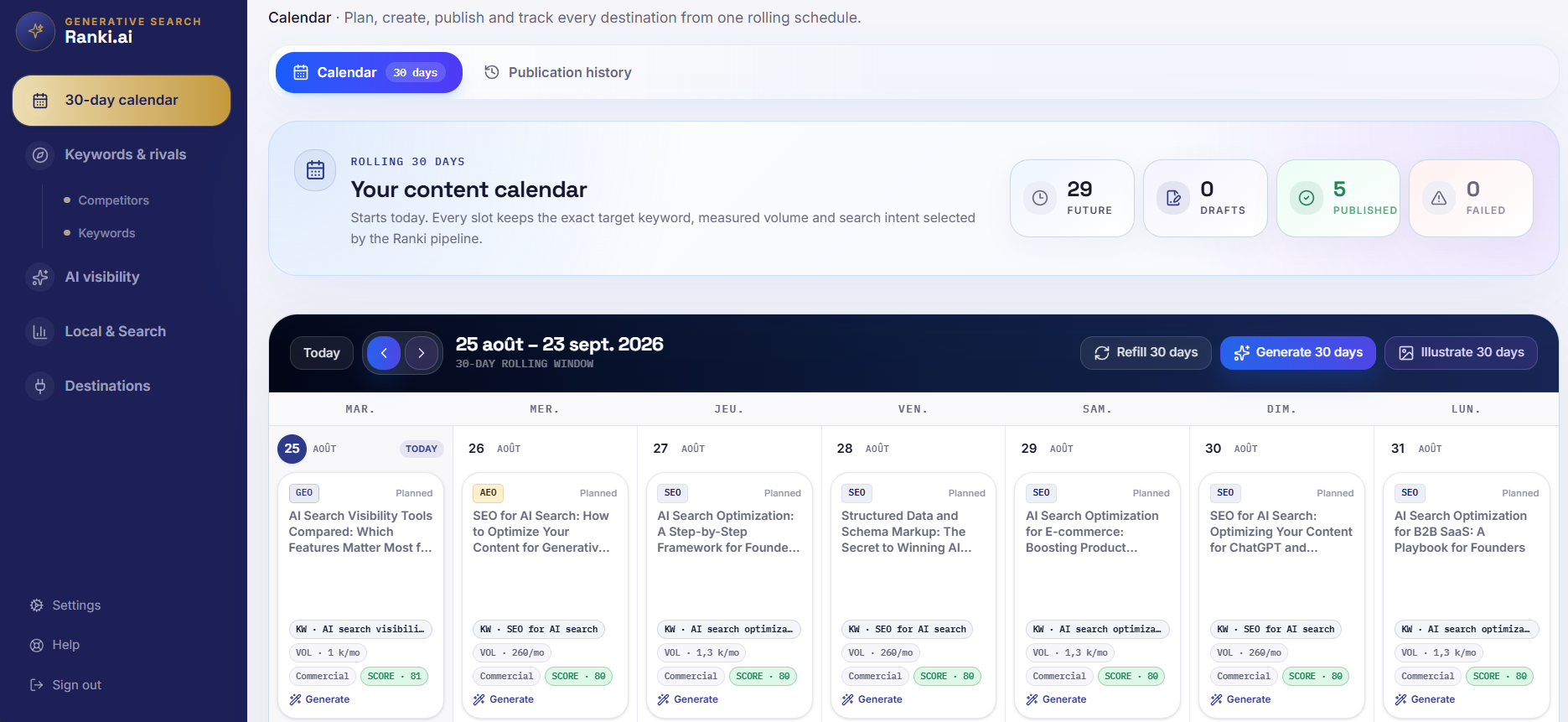
Ranki.ai connects research, editorial planning, content generation, publishing and visibility measurement in one workflow.
Analyze my site free