


What GEO changes — and what it does not
Traditional SEO optimizes a page for discovery in search results. GEO focuses on the additional step where an answer engine retrieves several sources, synthesizes them and may cite only a subset. The page still needs the same foundations: it must be accessible, indexable, useful and internally linked.
There is no universal schema that forces an AI engine to cite a page. The practical advantage comes from reducing ambiguity: say exactly what the product does, use consistent names, answer the question near the top and support important claims with evidence that can be checked.
What makes content easier to cite
AI answers are assembled around specific information needs. A generic marketing page often gives a retrieval system little factual material to reuse, while a focused page can contain several self-contained passages that answer distinct subquestions.
- A concise definition or direct answer before the long explanation.
- Specific product facts, limitations and integrations instead of vague superlatives.
- Tables or structured comparisons when buyers are evaluating alternatives.
- First-party evidence such as methodology, measurements, product documentation or original data.
- Descriptive headings that match the questions buyers actually ask.
How Ranki.ai applies GEO
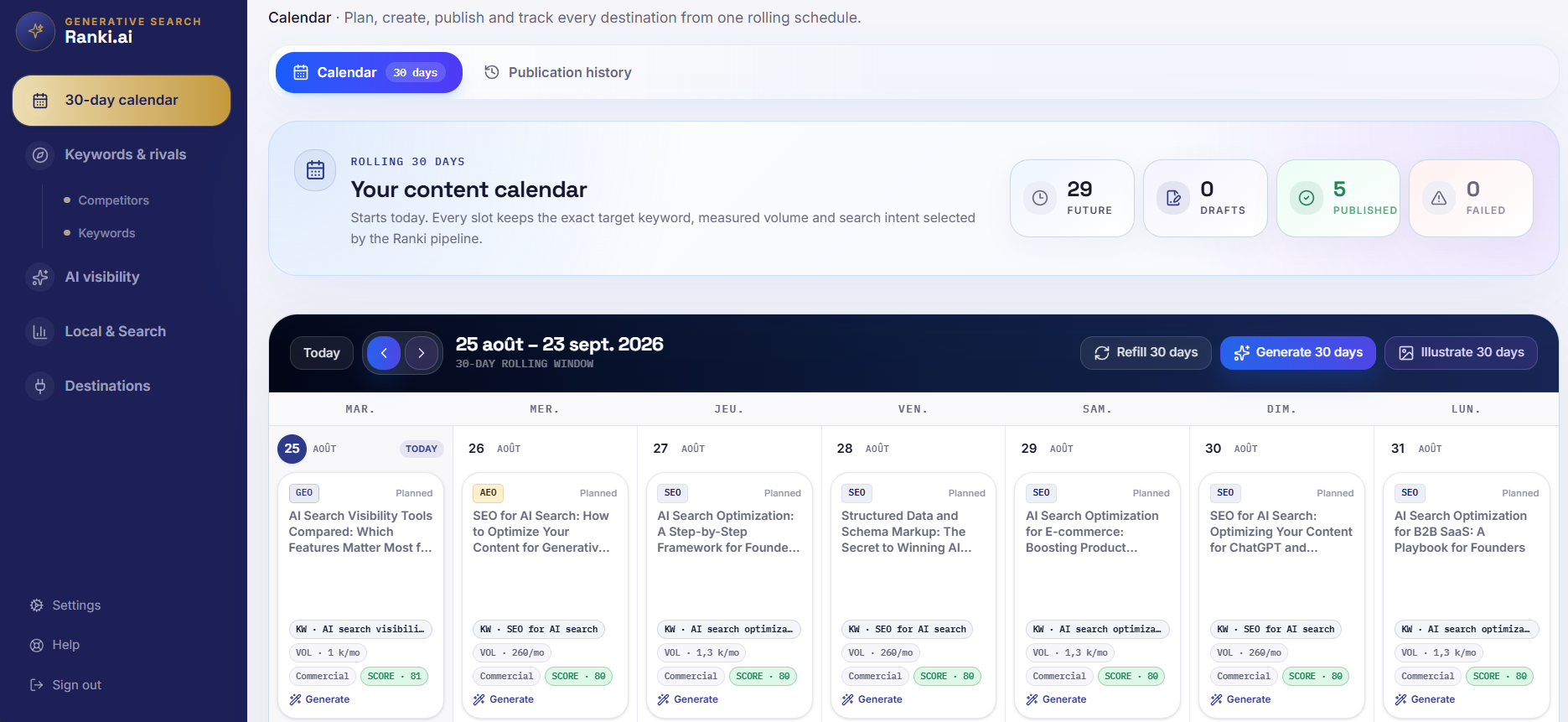
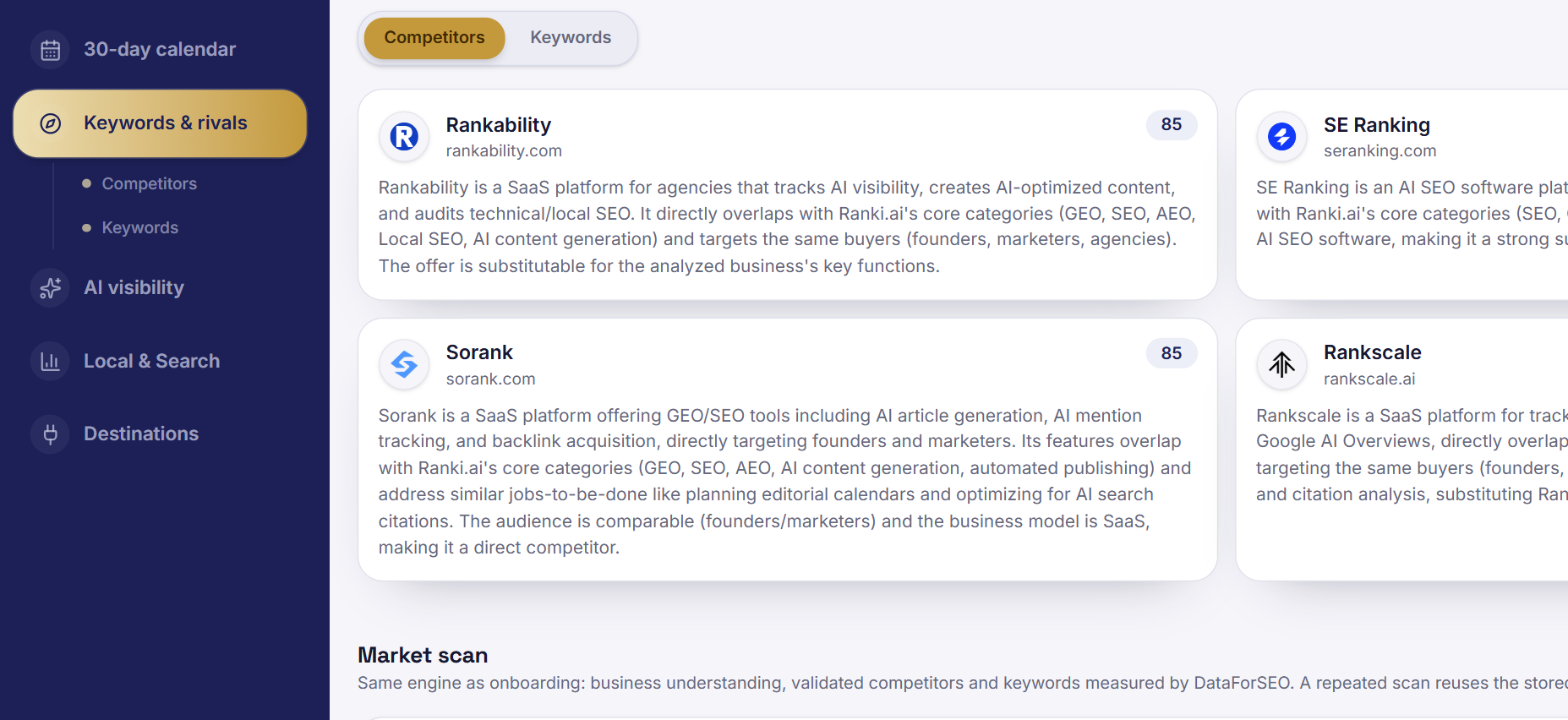
Ranki.ai starts with business and competitor research, measures search opportunities and turns that evidence into a rolling 30-day calendar. GEO slots are planned differently from classic SEO slots: the goal is to answer a retrieval-oriented question with enough entity context and factual detail to stand on its own.
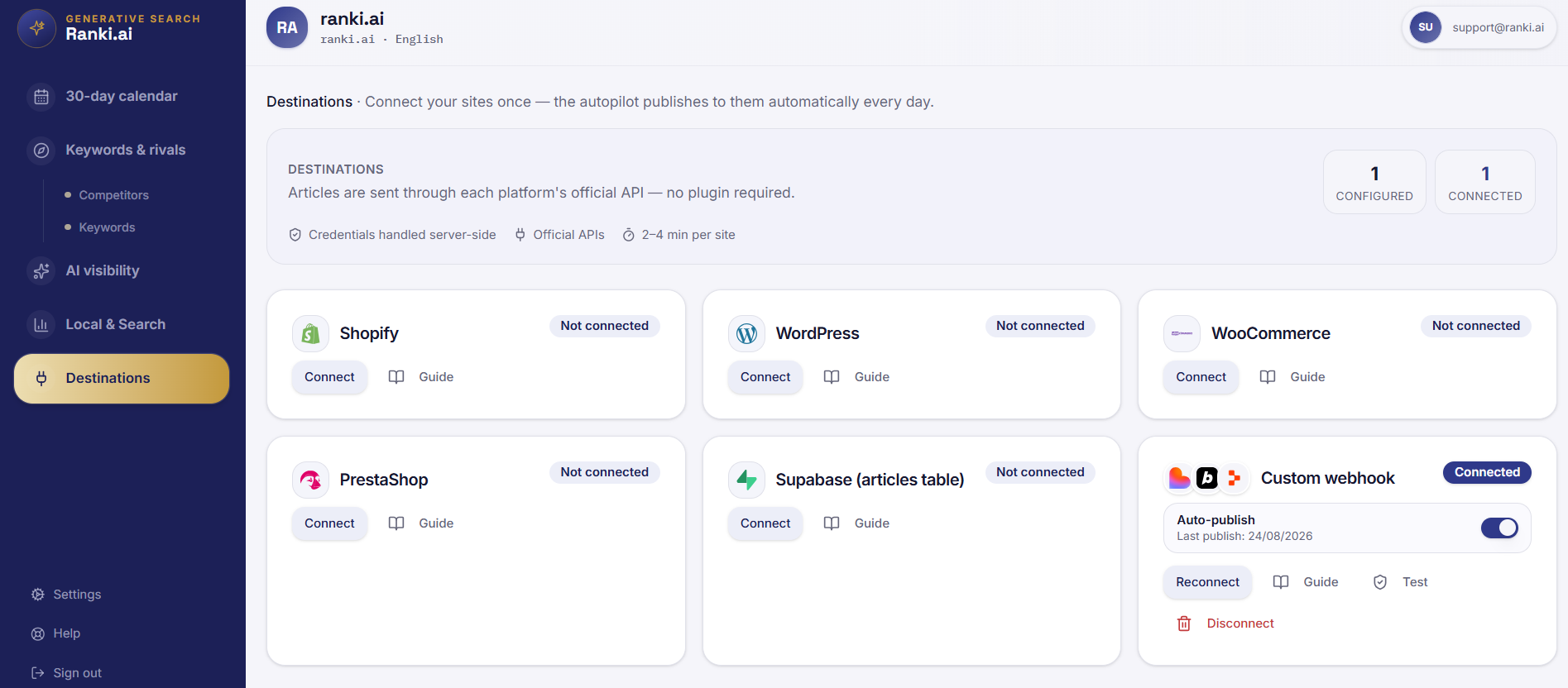
The same workflow can publish to connected destinations and then re-measure AI-answer visibility. That closes the loop: the team can see whether the brand is mentioned, recommended or cited instead of assuming that publishing alone created GEO visibility.
GEO measurement should be repeatable
A one-off prompt is not a useful KPI because AI answers vary. A better measurement set uses stable, unbranded buyer questions across several topic clusters and repeats them on a schedule. The meaningful signals are mention rate, recommendation rate, citation rate and the competitors that appear instead.
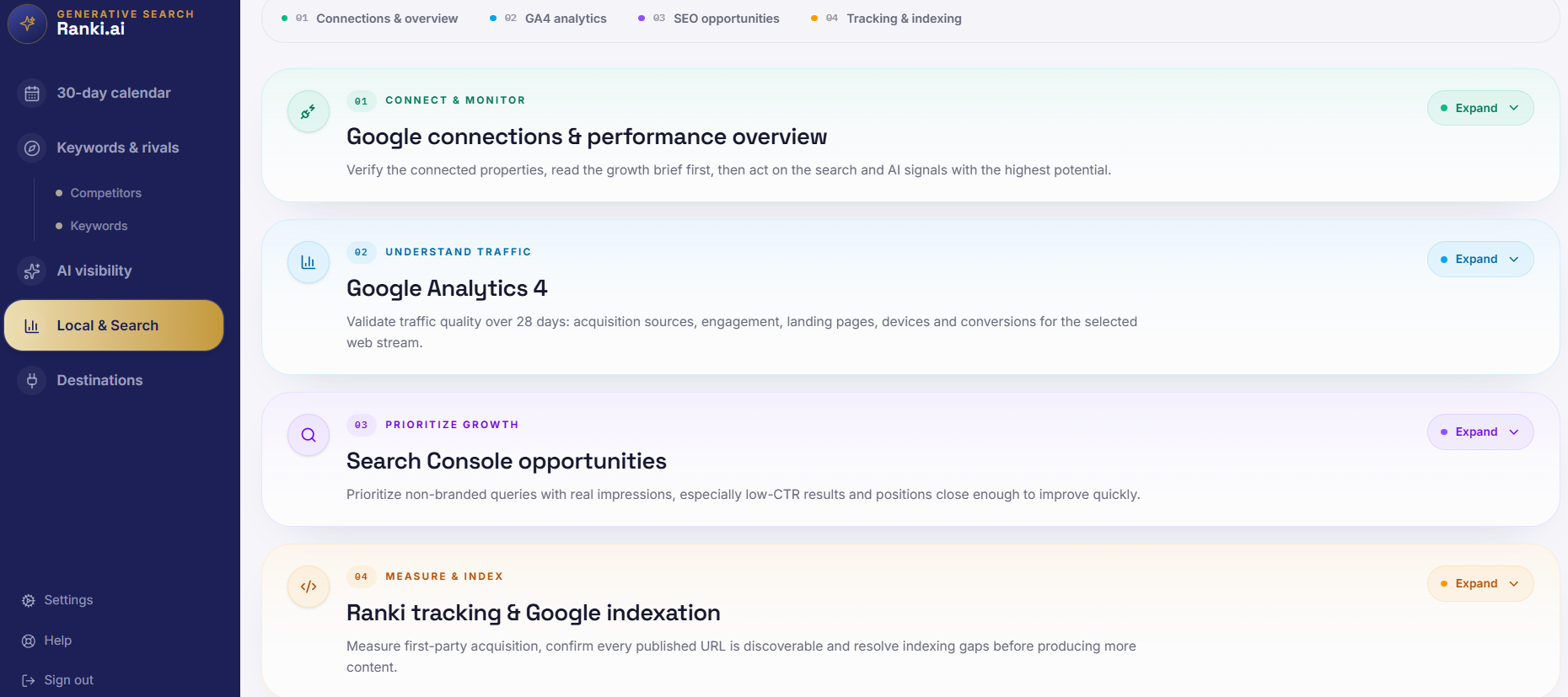
Ranki.ai separates those signals from Google Search Console data so AI-answer visibility and classic organic performance can be viewed together without pretending they are the same metric.
Frequently asked questions
Is GEO the same as SEO?
No. SEO focuses on organic search discovery and ranking, while GEO focuses on retrieval and citation inside generative answers. They share the same technical and content foundations, so strong GEO work normally strengthens rather than replaces SEO.
Do I need llms.txt to appear in Google AI Overviews?
No. Google says there is no special AI text file or schema required for AI Overviews or AI Mode. llms.txt is an emerging convention for other LLM and agent workflows, not a Google ranking requirement.
Can Ranki.ai guarantee a ChatGPT or Gemini citation?
No. No publisher can force an independent AI provider to cite a page. Ranki.ai improves the underlying content and measures whether mentions, recommendations and citations change over time.
Ranki.ai · GEO + SEO + AEO on autopilot
Turn the strategy into a 30-day execution plan
Ranki.ai connects research, editorial planning, content generation, publishing and visibility measurement in one workflow.
Analyze my site free