


The useful unit of automation is the pipeline
Generating a draft is only one step. Teams still lose time if they manually repeat competitor research, keyword checks, briefing, image creation, CMS formatting, internal linking and performance review for every article.
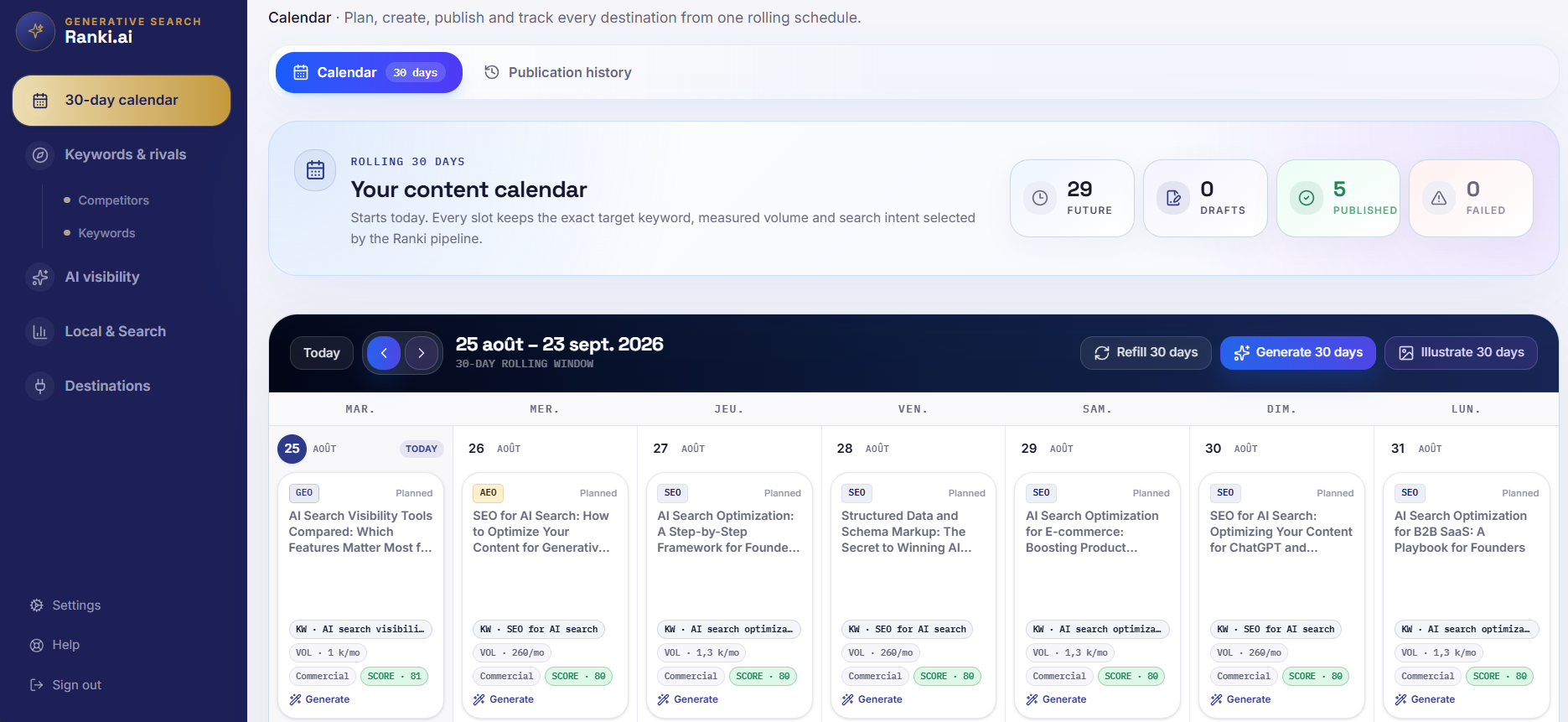
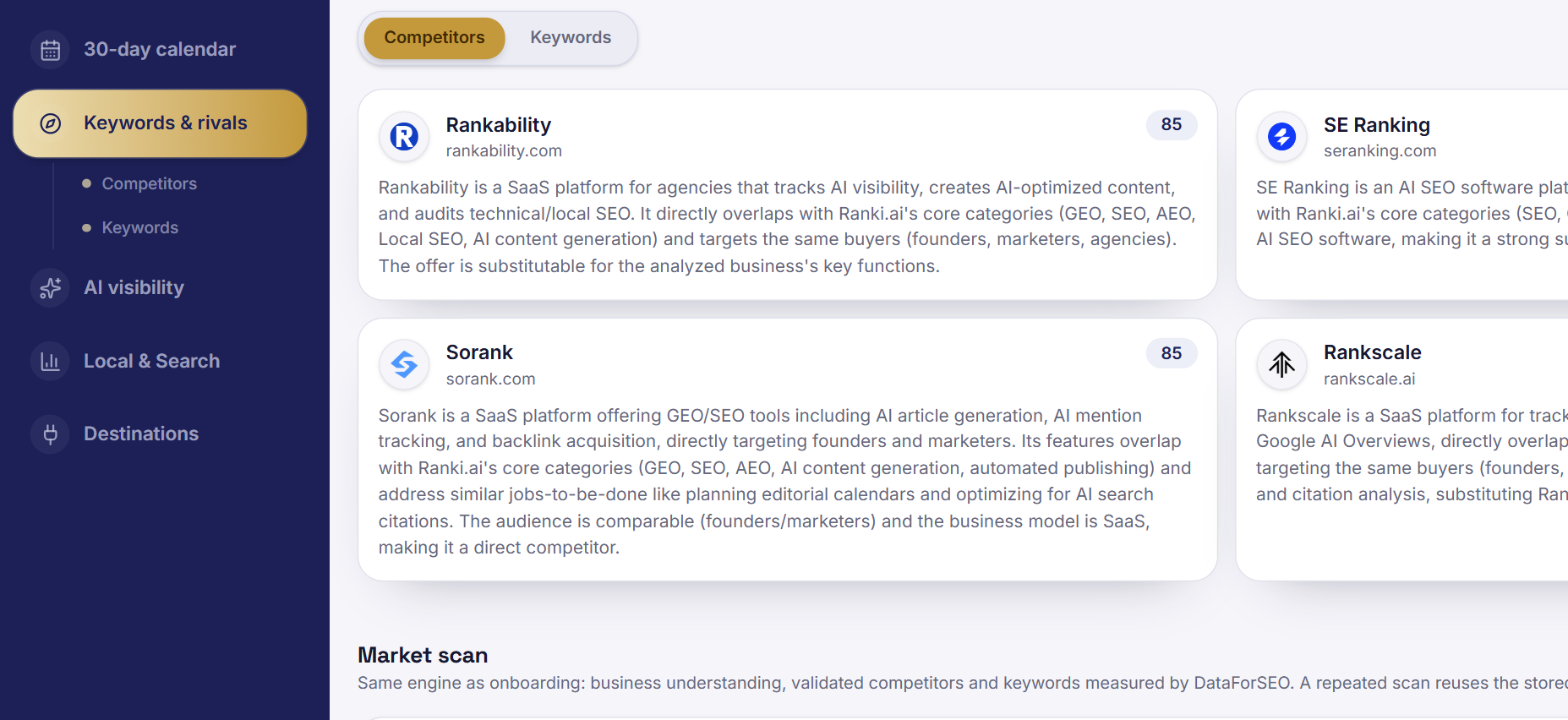
Ranki.ai treats these stages as one pipeline. A project starts with the website and business context, validates competitors and opportunities, then keeps a rolling 30-day calendar filled from that evidence.
Automate evidence, not just prose
The quality ceiling of a generated article is set before generation. If the input competitor is irrelevant or the keyword volume was invented, fluent prose cannot rescue the strategy. Automation should therefore preserve provenance for important inputs.
- Business facts extracted from the real site.
- Competitors validated for substitutable offer and audience fit.
- Measured keyword demand kept separate from unmeasured strategic clusters.
- Content format selected from search intent rather than a fixed article template.
- Publishing outcomes and performance stored for the next planning cycle.
A rolling calendar is different from a bulk content dump
Bulk generation creates a one-time backlog. A rolling calendar maintains a publishing runway and can refill as slots are completed. This also makes it easier to mix formats such as SEO, GEO, AEO, Local and Shopping rather than overproducing one topic family.
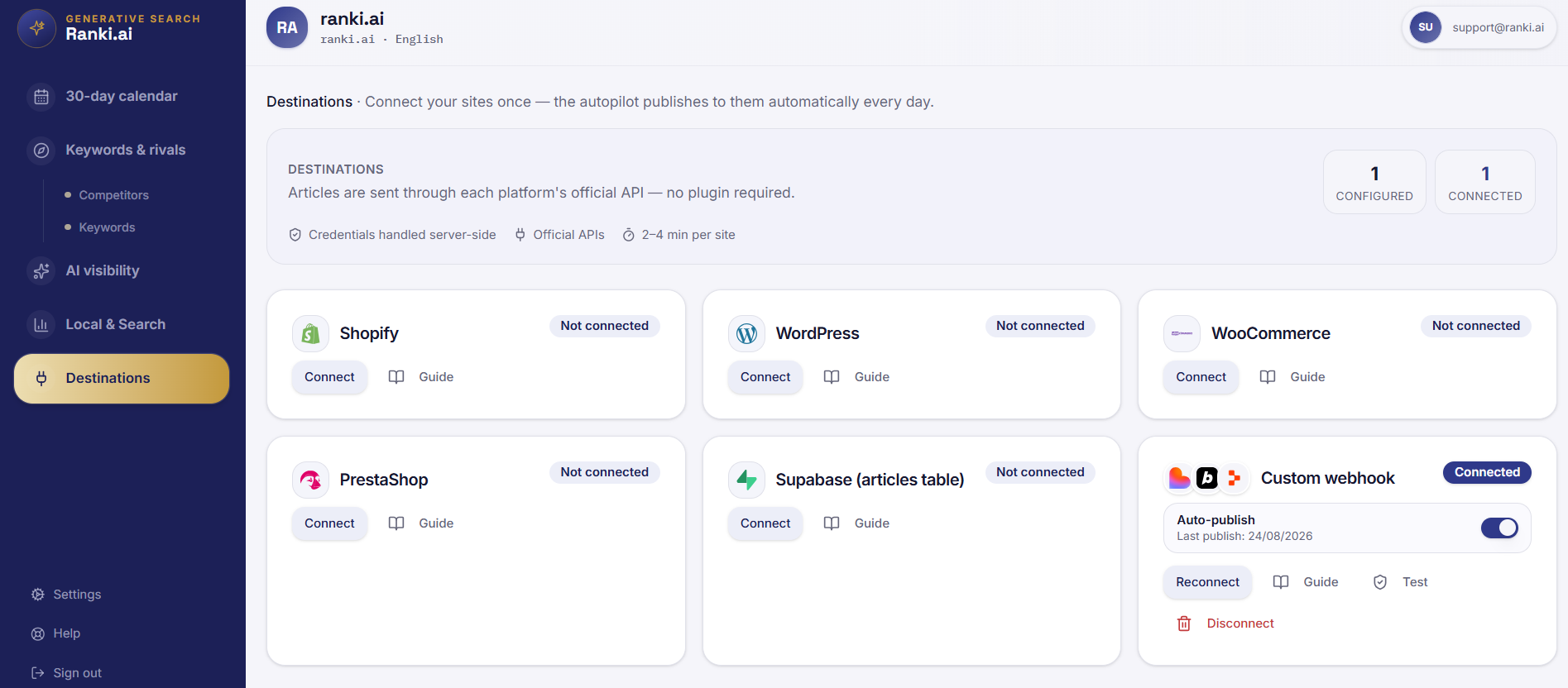
Ranki.ai allows drafts to be reviewed before publishing and supports automatic publishing per destination when a team is comfortable with the workflow.
Performance data should change what gets written next
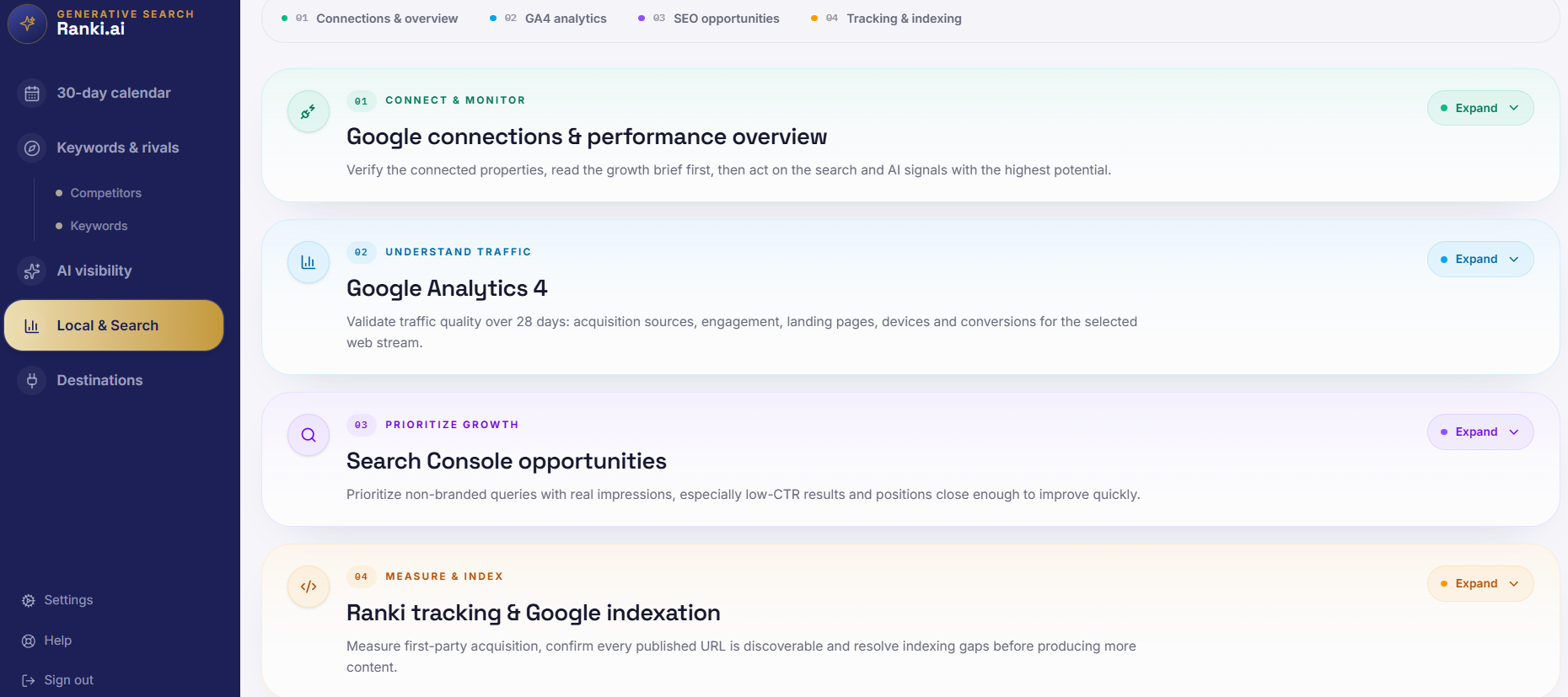
After publication, Search Console can reveal impressions, clicks and queries that were not visible during initial research. Analytics can show whether those visitors engage or convert. AI-answer measurements can show a separate visibility trend. Feeding those signals into later planning is what turns automation into a learning loop instead of a content factory.
Frequently asked questions
Is automated SEO content against Google guidelines?
Automation itself is not the issue. The risk is publishing low-value content primarily to manipulate rankings. Useful, accurate content should meet the same quality standards regardless of whether AI assisted the workflow.
Can I keep articles as drafts?
Yes. Ranki.ai can keep generated articles editable before publication, and automatic publishing is controlled per destination.
Which destinations can Ranki.ai publish to?
Current workflows include WordPress, WooCommerce, PrestaShop, Shopify and code-based sites through supported repository, API or webhook publishing paths.
Ranki.ai · GEO + SEO + AEO on autopilot
Turn the strategy into a 30-day execution plan
Ranki.ai connects research, editorial planning, content generation, publishing and visibility measurement in one workflow.
Analyze my site free