


The minimum useful AI visibility measurement
The simplest tools ask a list of prompts and count brand appearances. That can be a useful starting point, but the score becomes hard to trust if the questions change every run, branded questions are mixed with discovery questions or failed provider responses silently count as zero visibility.
A stronger system keeps a stable question set for each project, records which providers actually returned an answer and reports the denominator transparently. This makes a move from 10% to 20% interpretable instead of cosmetic.
- Unbranded discovery questions grouped by buyer intent or topic cluster.
- Successful-answer count for each AI provider.
- Brand mention, recommendation and citation as separate fields.
- Competitors surfaced in the same answer set.
- Historical runs so changes can be compared over time.
How to track brand visibility in ChatGPT, Perplexity and Gemini
Start with questions a buyer would ask before knowing the brand. Run the same questions against each supported AI provider, store the successful answers and record whether the brand is mentioned, actively recommended or cited as a source. Repeat the same set on a schedule so the trend is comparable.
Do not combine every provider into one opaque score. ChatGPT, Perplexity and Gemini can retrieve different sources and surface different competitors. Provider-level evidence shows where the gap actually exists and which content deserves attention first.
- Keep branded lookup questions separate from unbranded discovery questions.
- Track which competitor brands appear when yours does not.
- Store citation URLs instead of counting a citation without evidence.
- Compare AI visibility with Search Console impressions, clicks and first-party traffic.
- Turn absent-brand questions into a content or page-improvement action only when the topic is relevant to the business.
Tracking alone is not the same as improving visibility
A visibility dashboard tells you where the brand is absent. The next question is what to do about that absence. Teams often have to leave the monitoring product, research the query again, create a brief in another tool, generate content elsewhere and finally publish through a CMS.
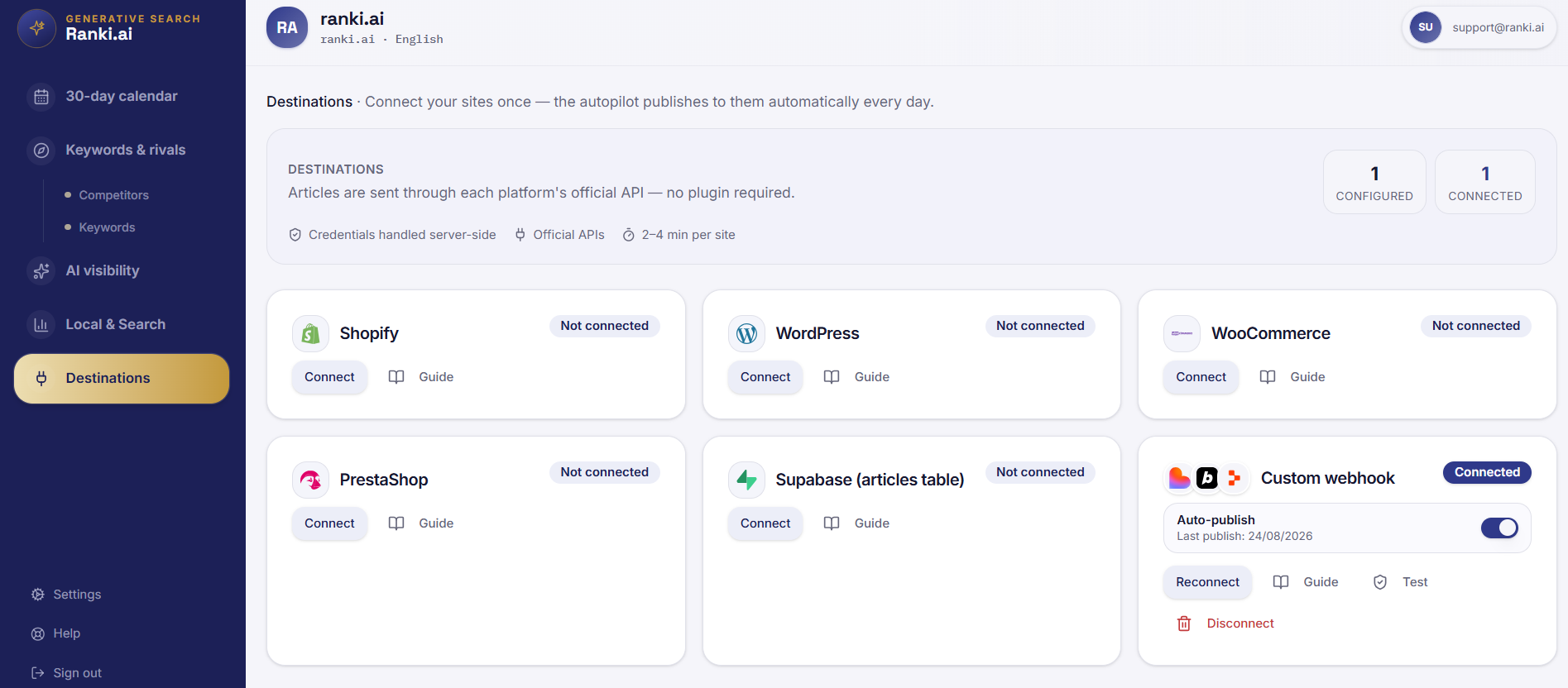
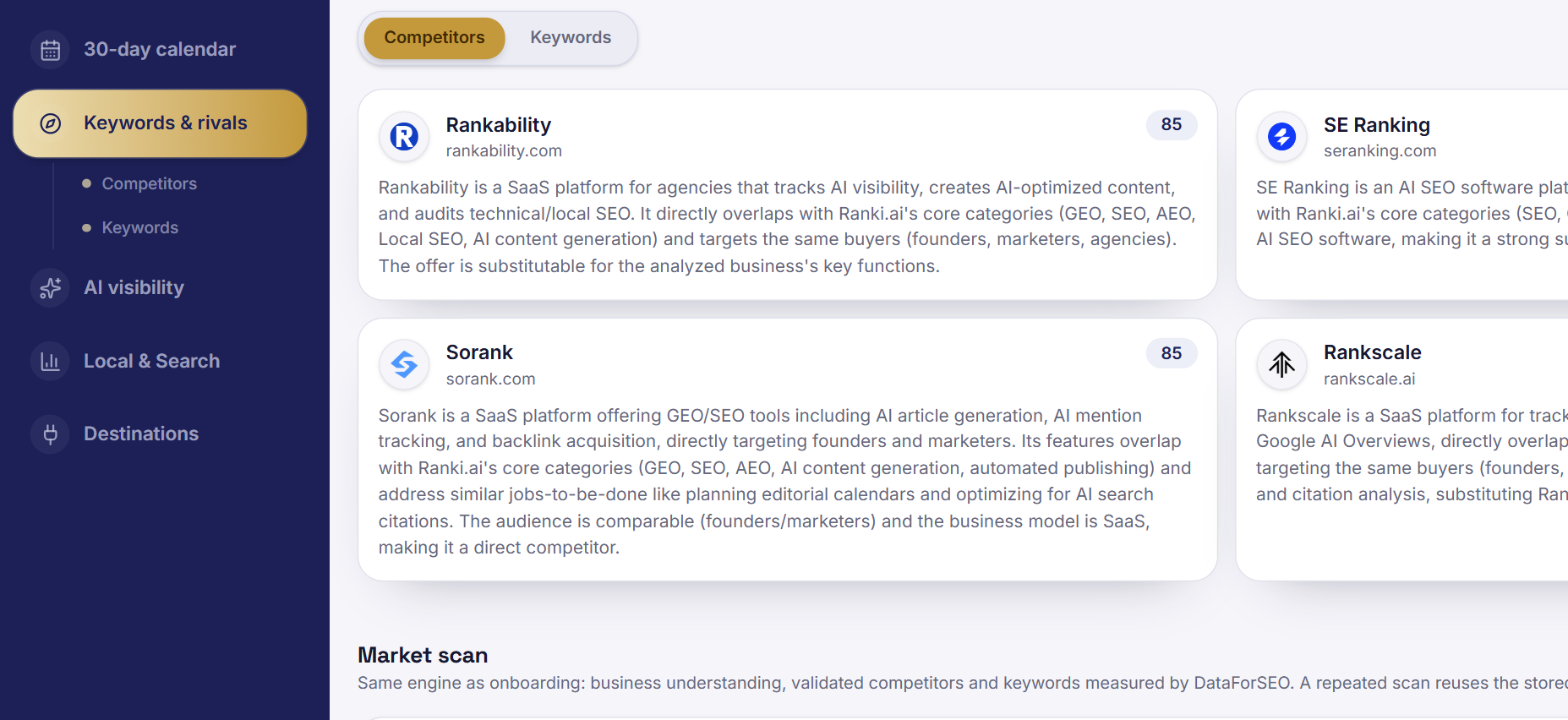
Ranki.ai is designed around the full loop: research the business and competitors, measure search opportunities, plan GEO and AEO content, publish to connected destinations and then repeat AI visibility measurement. The monitoring signal therefore becomes an input to the next content cycle rather than an isolated KPI.
Questions to ask before paying for AI search visibility software
The right product depends on whether you only need monitoring or also need execution. Before choosing a platform, verify exactly what its score represents and what happens after a gap is found.
- Can I inspect the exact questions being measured?
- Are branded and unbranded prompts reported separately?
- Can I see results per provider instead of only a blended score?
- Does the platform distinguish a mention from a recommendation or citation?
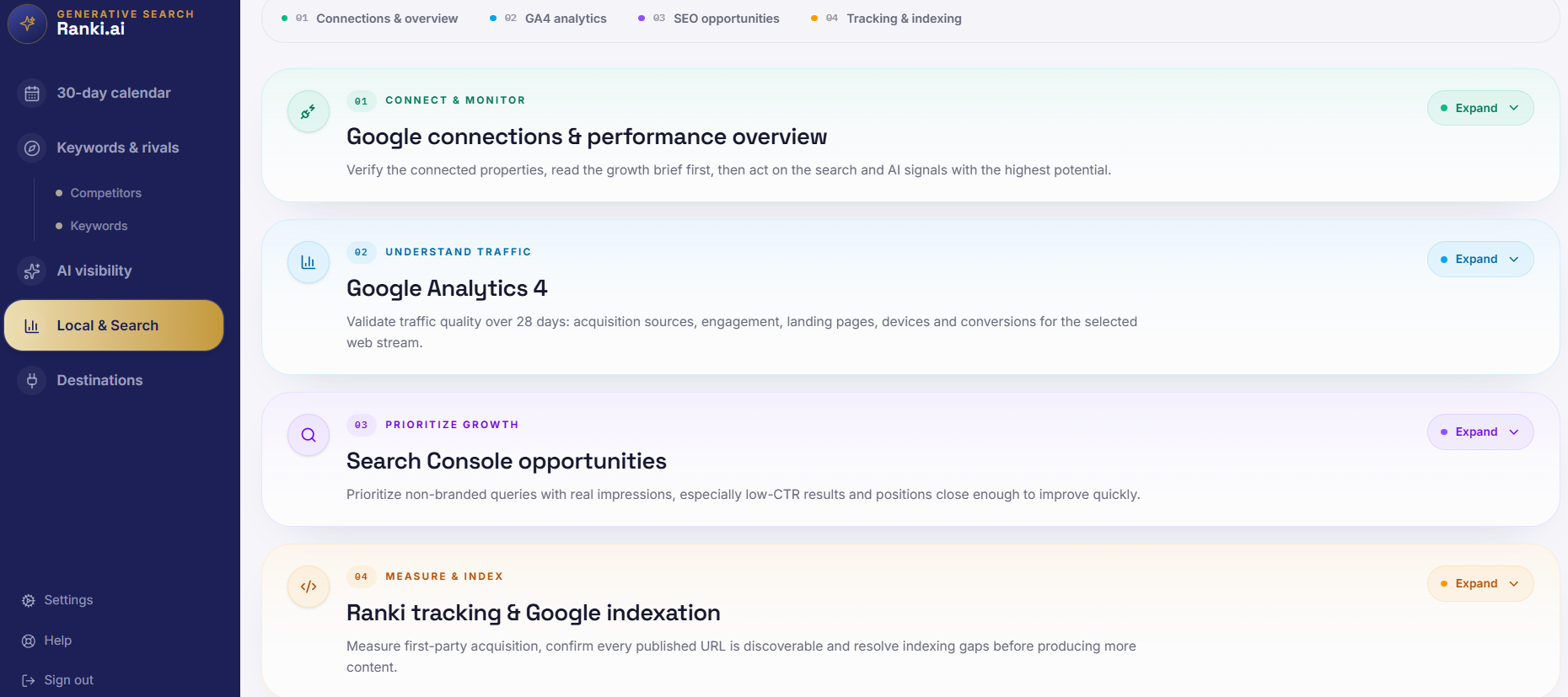
- Can it connect AI visibility with Search Console or analytics data?
- Does it help create and publish the content required to address a gap?
Where Ranki.ai fits
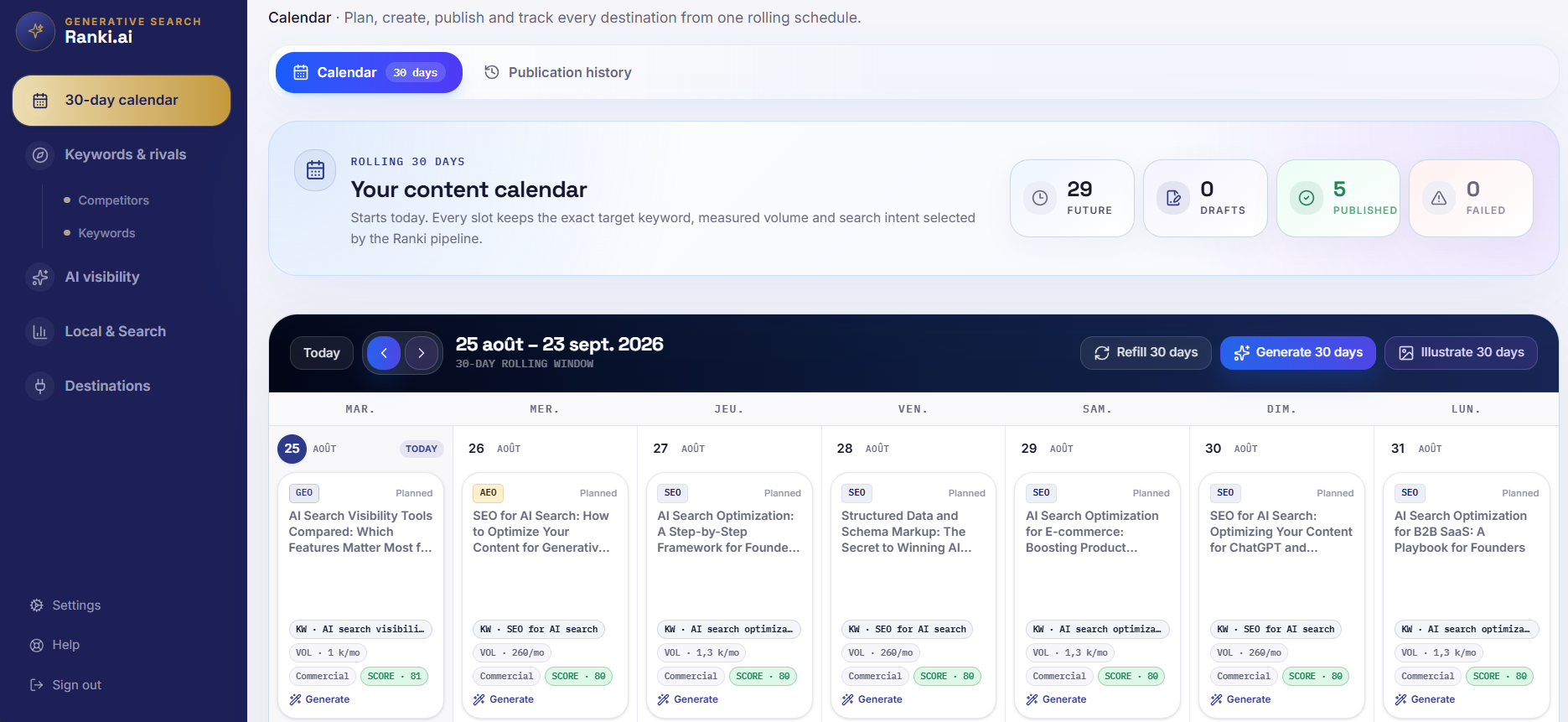
Ranki.ai is a fit when the goal is not only to monitor AI answers but to operate a repeatable GEO, SEO and AEO publishing system. It combines market research, measured opportunities, a rolling 30-day calendar, content and image generation, connected publishing and AI visibility measurement.
It is not a promise that an independent AI provider will cite a page. The purpose is to make the work measurable and repeatable: publish stronger candidate sources, observe what the engines actually surface and use the next cycle to address the remaining gaps.
Frequently asked questions
How do I track my brand in ChatGPT, Perplexity and Gemini?
Use a stable set of unbranded buyer questions, run them repeatedly across each provider and record brand mentions, recommendations, citations and competitors. Keep provider-level results visible because each assistant can return different answers and sources.
What is the difference between an AI visibility tool and an SEO rank tracker?
A rank tracker records positions in search result pages for selected keywords. An AI visibility tool evaluates generated answers and records signals such as brand mentions, recommendations, citations and competitor presence. The two datasets can complement each other but they are not interchangeable.
Should ChatGPT, Gemini and Perplexity be combined into one score?
A blended headline can be convenient, but provider-level results should remain visible because each engine can retrieve different sources and recommend different brands. Otherwise a strong result on one provider can hide a complete absence on another.
Can an AI visibility platform guarantee citations?
No. Independent AI systems control their own retrieval and answer generation. A platform can improve content quality and source availability and measure the outcome, but it cannot force a citation.
Ranki.ai · GEO + SEO + AEO on autopilot
Turn the strategy into a 30-day execution plan
Ranki.ai connects research, editorial planning, content generation, publishing and visibility measurement in one workflow.
Analyze my site free