

The GEO market now has several different product categories
AI-search products are converging, but they still start from different jobs. Some began as prompt and brand-visibility trackers, some as enterprise answer-engine analytics, some as SEO or content suites, and others as execution systems. Comparing them only by the number of AI engines hides the operational difference.
Public product and pricing information reviewed September 24, 2026. Features and packaging can change, so verify the vendor's current plan before buying.
- Peec AI: AI-search analytics, source intelligence, competitor visibility and prioritized Actions.
- Promptwatch: multi-model visibility, analytics, crawler and citation intelligence, plus content agents.
- Profound: answer-engine insights with agents and enterprise-oriented integrations.
- OtterlyAI: accessible daily AI-search monitoring, prompt research, audits and reporting.
- Scrunch: prompt tracking, page audits and an Agent Experience Platform orientation.
- Writesonic: broad SEO, GEO and content execution with an action-oriented workflow.
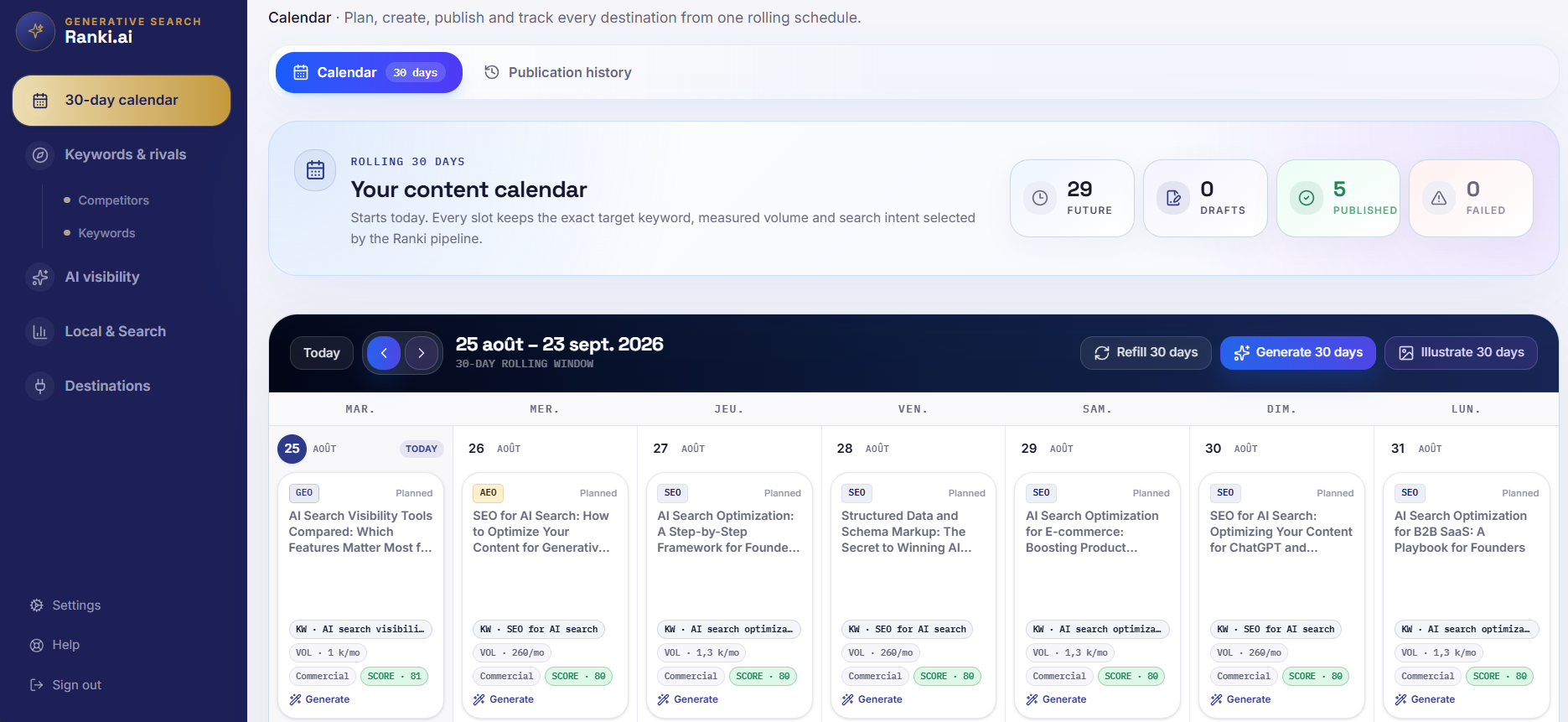
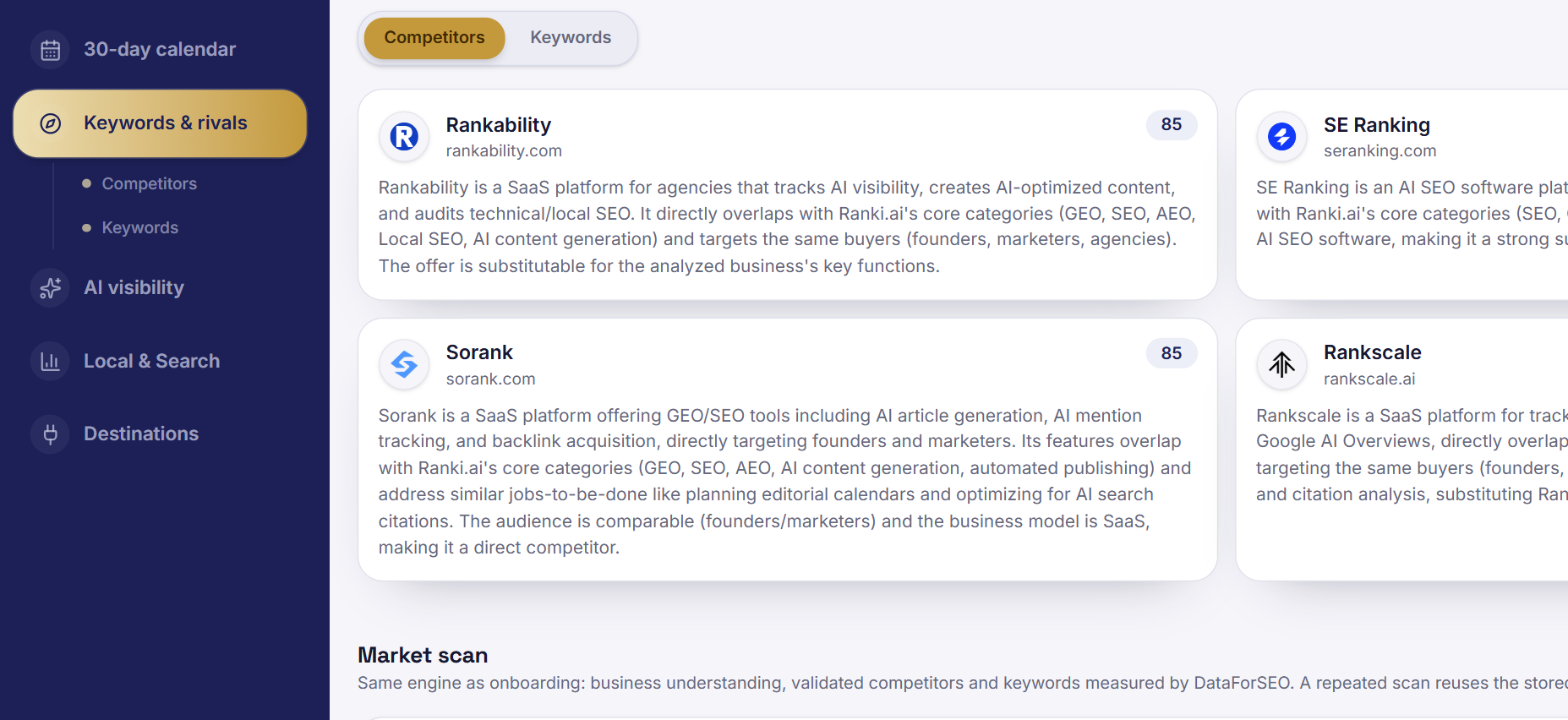
- Ranki.ai: research, measured SEO/GEO opportunities, a rolling 30-day plan, content creation, connected publishing and re-measurement.
Compare the workflow after a visibility gap is found
A dashboard can correctly show that a competitor appears for a buyer question while your brand does not. The expensive part begins after that finding: validate the topic, decide whether a product page, comparison, article or off-site action is appropriate, produce the asset, publish it and measure whether anything changed.
Ask each vendor to demonstrate that complete path on one real gap. This exposes whether the product primarily informs a team, assists a team or can execute a controlled content workflow.
- Can the tool explain why the opportunity matters?
- Can it distinguish measured search demand from generated topic ideas?
- Can you review and edit the planned asset before generation?
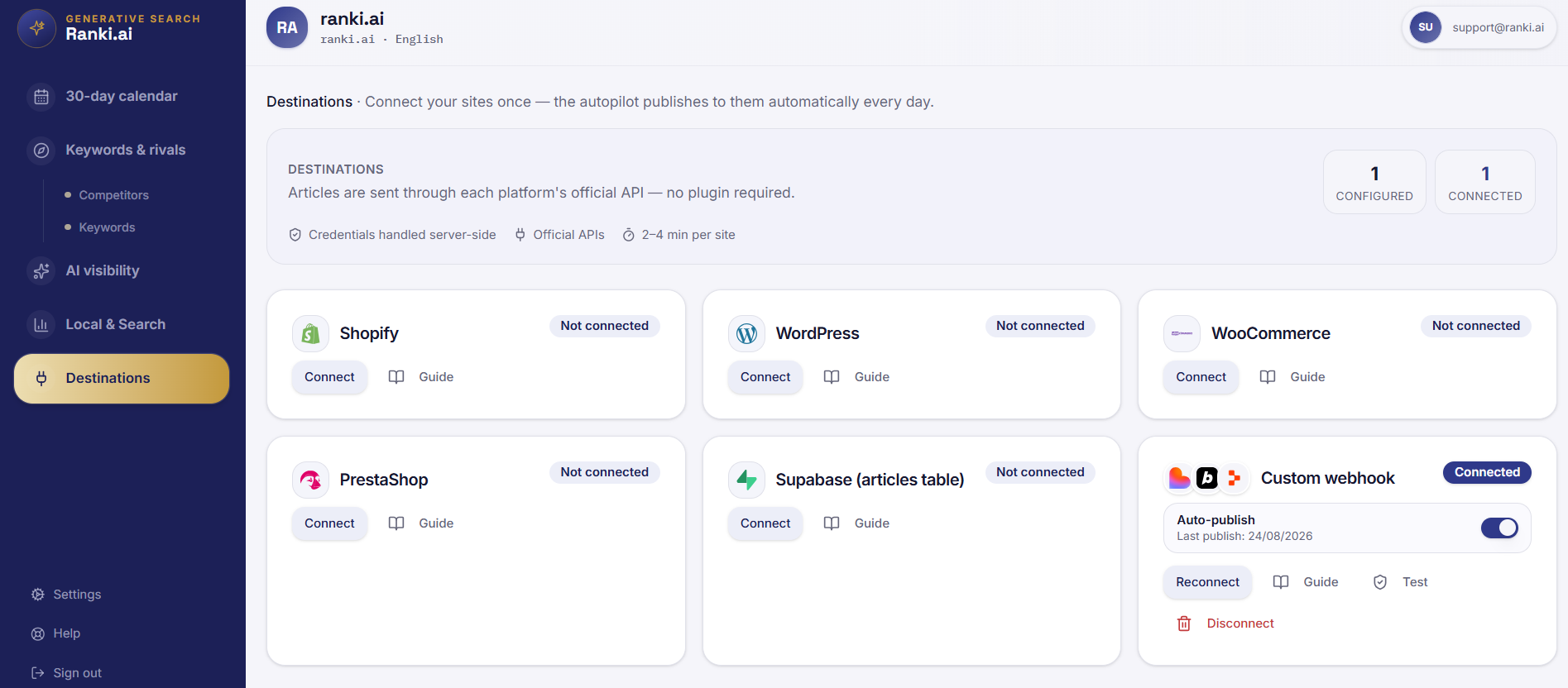
- Can it publish to your actual CMS or code destination?
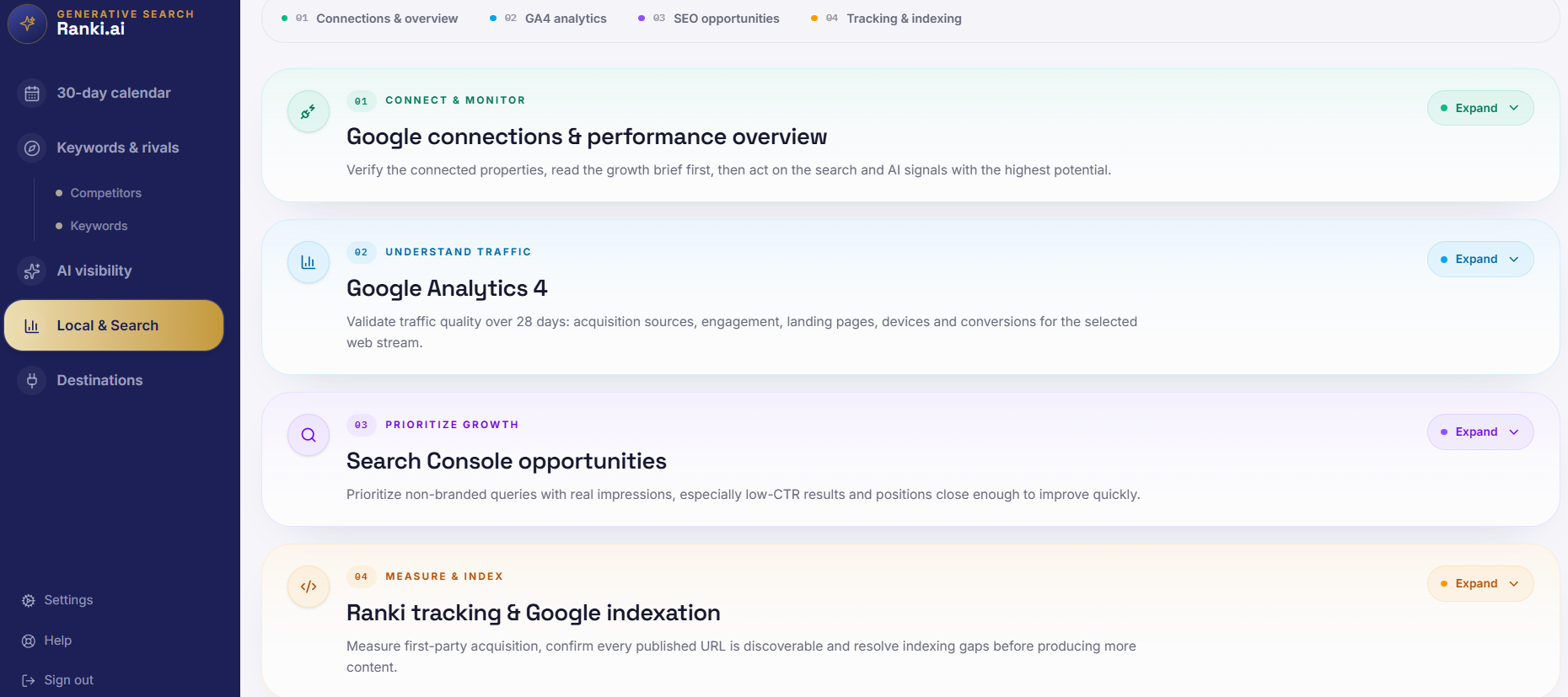
- Can you connect Search Console or first-party analytics?
- Can you re-run the same AI questions after publication?
Do not compare prices without normalizing usage
GEO pricing often depends on prompts, models, countries, projects, tracked answers, seats, agent credits or add-ons. A cheap entry plan can become expensive after adding engines or prompt volume, while a broader plan can include capabilities you do not need.
Normalize the quote around the same use case: number of brands, prompts, AI engines, countries, users, publishing volume and reporting frequency. Then include the human cost of moving recommendations into separate research, writing and publishing tools.
Where Ranki.ai is positioned
Ranki.ai is designed for teams that want the measurement signal to feed a recurring execution system. A project starts with the real website and market, validates competitors and opportunities, turns that evidence into a rolling content calendar, creates assets, publishes to connected destinations and measures search and AI visibility again.
That positioning does not make every analytics-heavy platform unnecessary. Large teams may prefer specialized analytics alongside their existing content operations. The decision is whether your bottleneck is knowing what happened, deciding what to do next, or repeatedly shipping the work.
Frequently asked questions
What should I look for in a GEO tool?
Check prompt methodology, AI-engine coverage, competitor and citation evidence, source transparency, content or technical recommendations, publishing workflow, SEO integrations and historical measurement. Evaluate the plan you would actually buy rather than the vendor's maximum enterprise feature list.
Are GEO tools the same as AI rank trackers?
Not always. An AI rank tracker focuses on repeated prompt results and brand visibility. A broader GEO platform can also analyze sources and competitors, recommend actions, create or optimize content, connect publishing and measure search or conversion outcomes.
Can a GEO platform guarantee ChatGPT or Gemini citations?
No. Independent AI providers control retrieval and answer generation. A platform can improve source quality, crawlability, relevance and measurement, but it cannot force an external model to cite a page.
Why does Ranki.ai include itself in this comparison?
Ranki.ai publishes this page and competes in the category. The purpose is to make the evaluation criteria explicit and link to vendor sources so buyers can verify claims instead of treating a self-published ranking as independent research.
Ranki.ai · GEO + SEO + AEO on autopilot
Turn the strategy into a 30-day execution plan
Ranki.ai connects research, editorial planning, content generation, publishing and visibility measurement in one workflow.
Analyze my site free