

1. Analyze the website and business
Ranki.ai starts from the actual site so the project can understand the offer, audience, existing pages and business language before proposing content. This first-party context reduces the risk of generic AI topic generation drifting away from the commercial reality of the company.
The analysis is meant to establish a stable business model for later research: what the company sells, who it serves, which topics are in scope and which facts should remain consistent across future pages.
2. Validate competitors and search demand
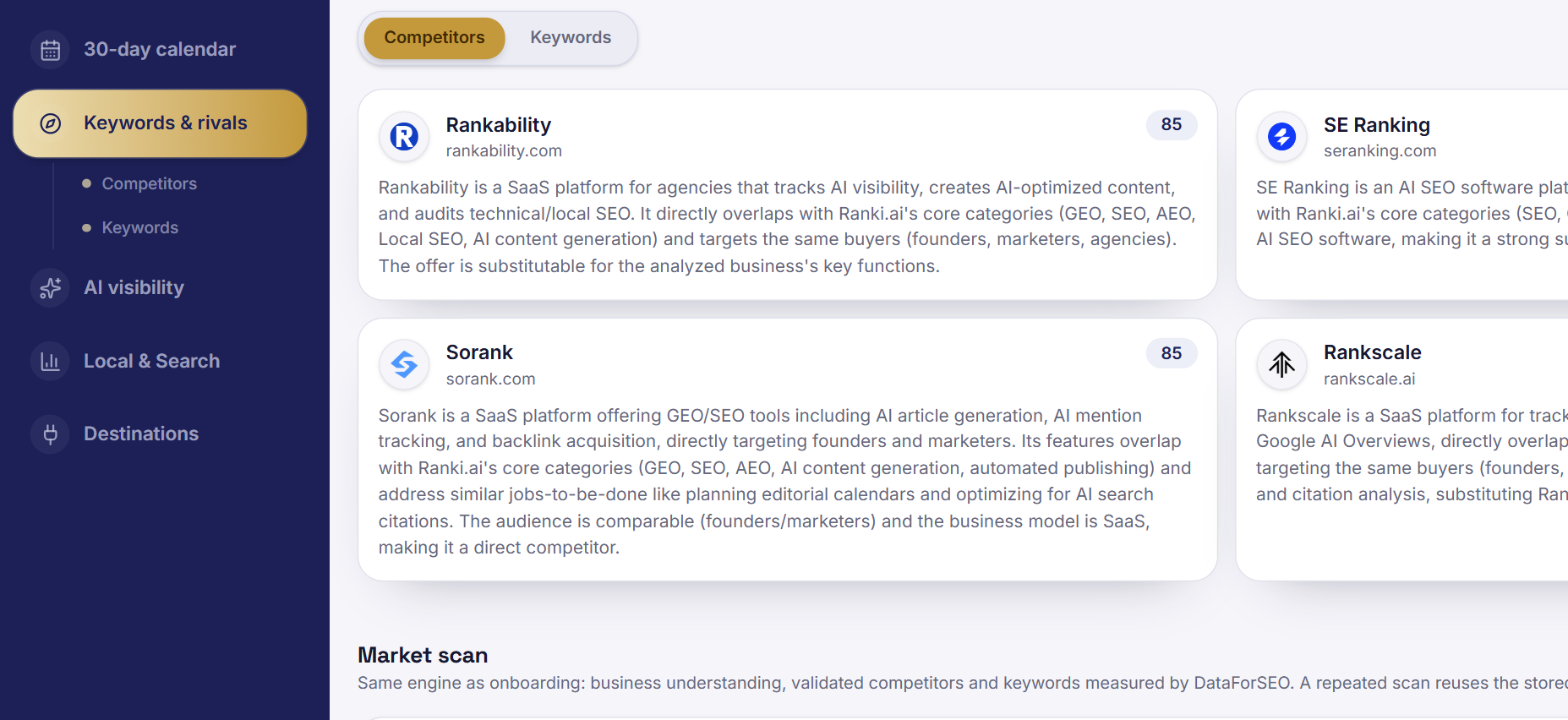
Ranki.ai separates real direct competitors from publishers, directories and incidental domains that may appear in the same search results. It then connects competitive overlap with measured search opportunities so planning decisions can be grounded in evidence.
Measured demand and strategic topic ideas remain different categories. A topic can be useful for GEO or AEO even when reliable search volume is unavailable, but the system should not present an invented number as if it were verified.
- Validate direct competitors against business fit.
- Inspect search-result and content overlap.
- Keep measured keyword demand auditable.
- Preserve strategic GEO and AEO questions without fabricating volume.
3. Build the 30-day plan and create content
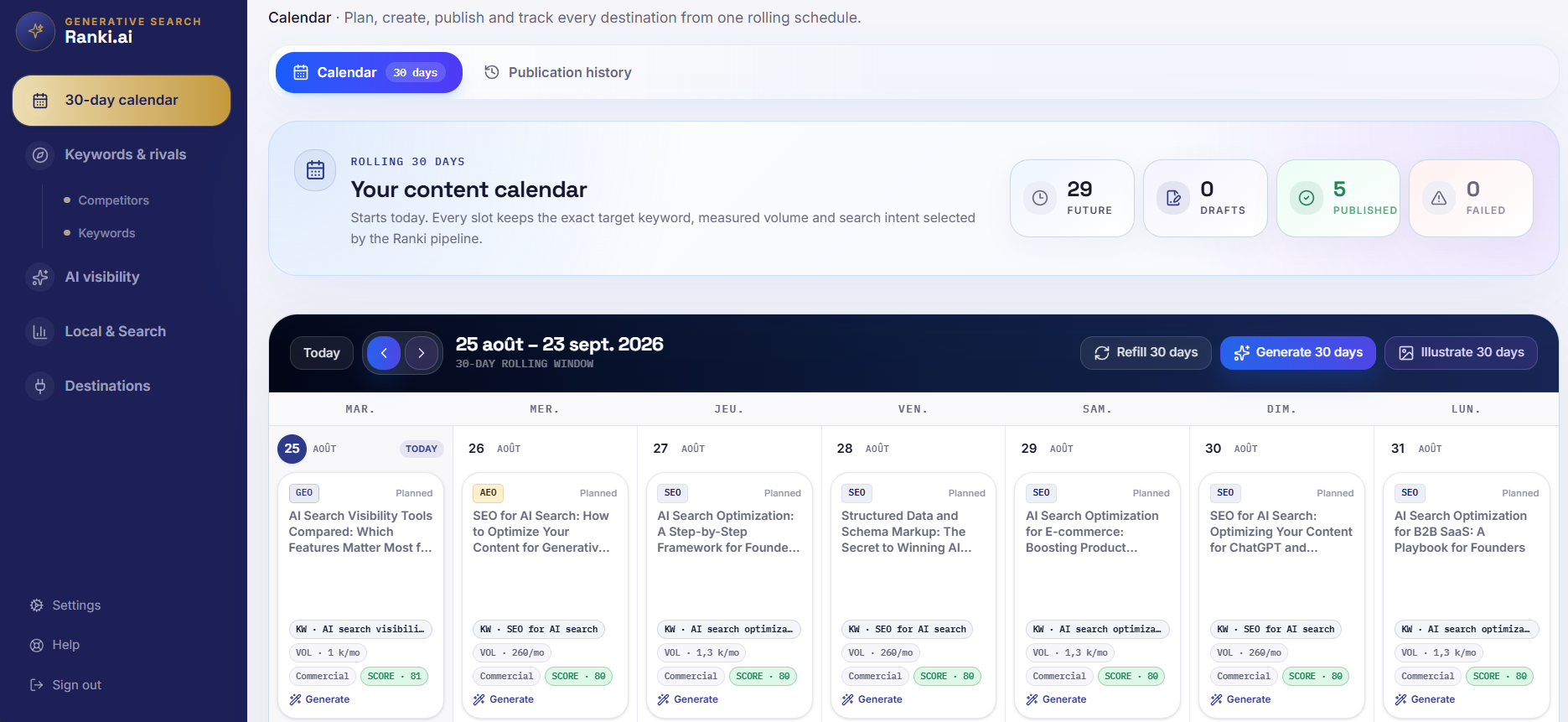
The calendar converts research into execution. Rather than filling thirty days with near-duplicate keyword pages, Ranki.ai can mix SEO, GEO, AEO, local, shopping, comparison, use-case and authority-building intents where they fit the project.
Each slot keeps its target opportunity and intent attached. Approved opportunities can then become editable drafts with a direct answer, descriptive sections, examples, FAQs, internal links and a conversion goal.
4. Publish, measure and refill
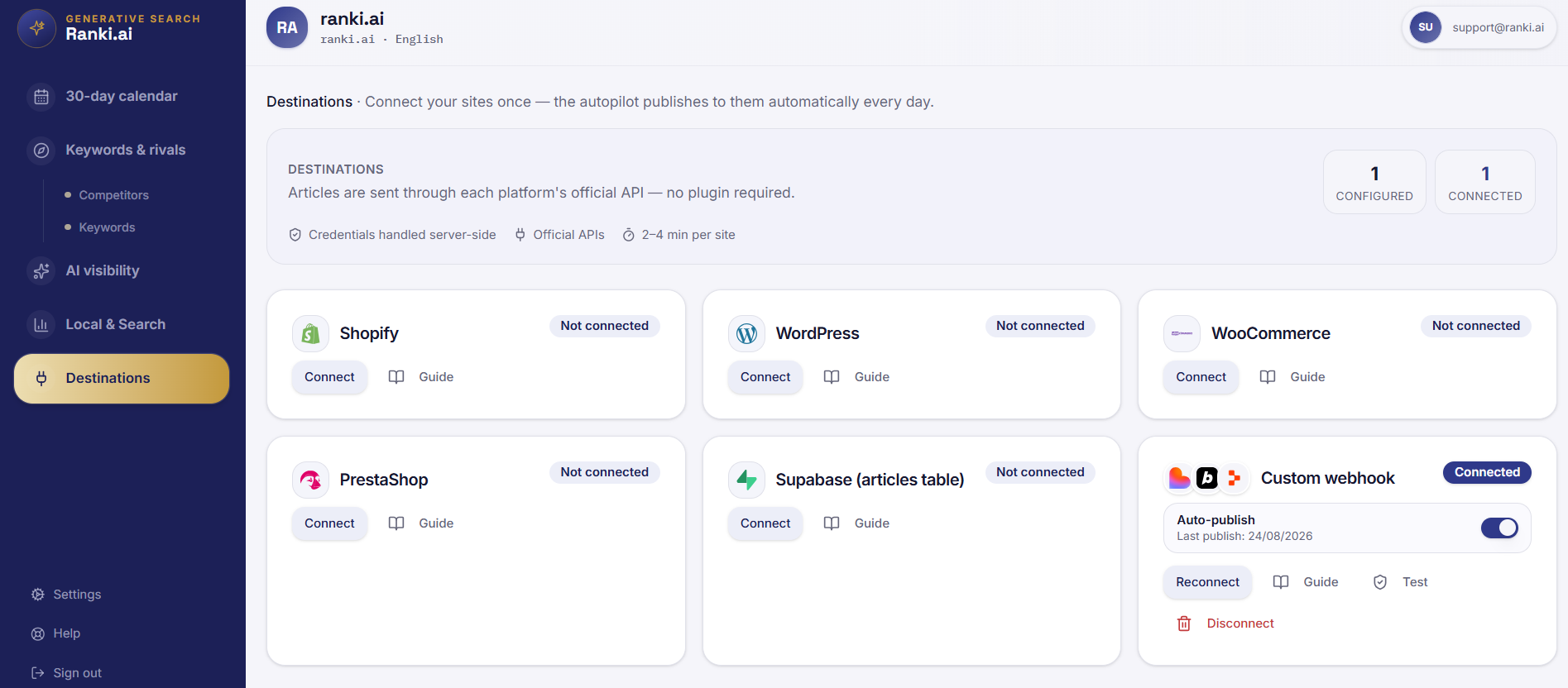
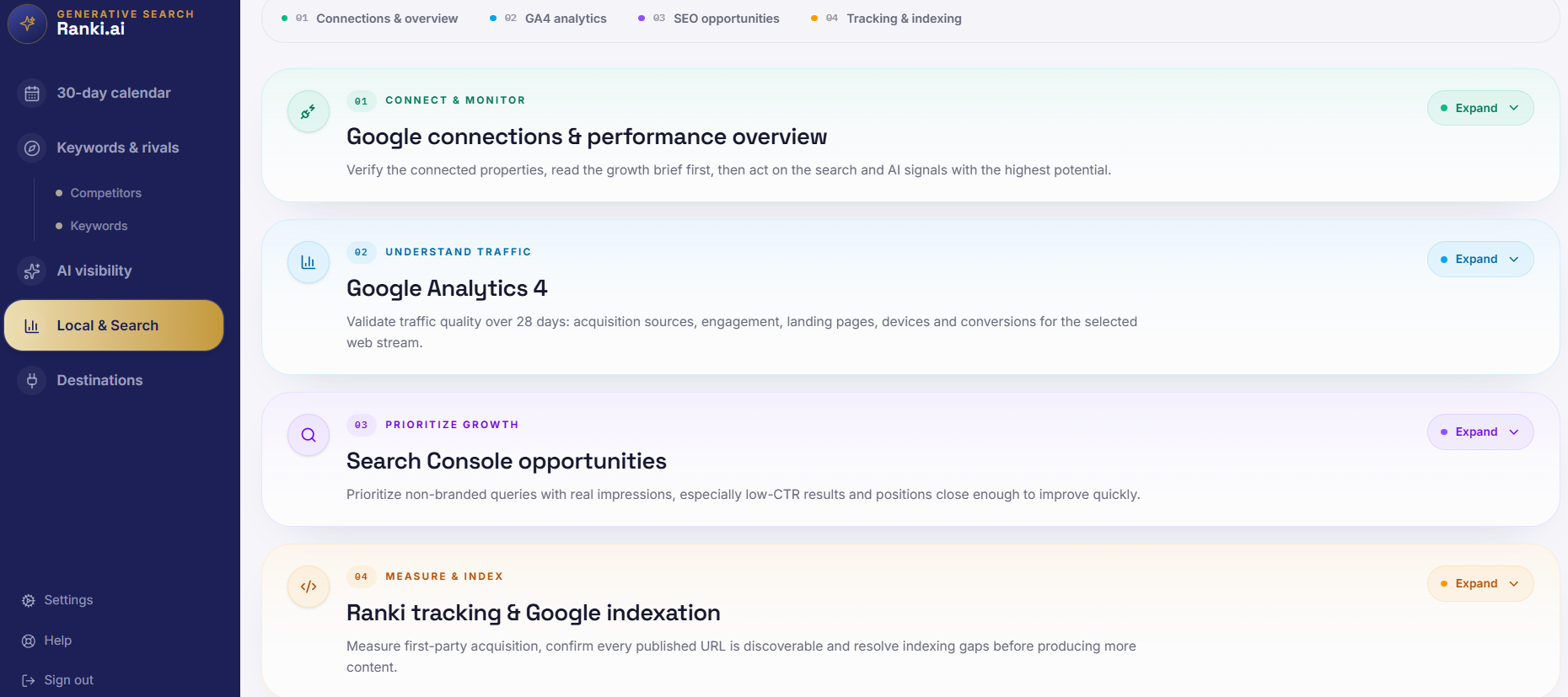
Approved content can move to connected destinations instead of staying in a planning dashboard. After publication, Search Console and analytics answer classic search questions while AI visibility tests show whether stable buyer questions mention, recommend or cite the brand.
Those signals can feed the next cycle. The workflow is therefore not finished when an article is generated; it becomes useful when the observed result can change the next research and publishing decision.
Frequently asked questions
Does Ranki.ai publish automatically?
Ranki.ai supports publishing workflows to connected destinations. Content can remain editable for review, while automation can be configured according to the destination and project setup.
Does Ranki.ai use real search data?
The product distinguishes measured search opportunities from strategic, unmeasured ideas so a generated plan does not need to invent demand figures.
What happens after 30 days?
The calendar is designed as a rolling plan. Performance and visibility evidence can feed the next cycle so the project continues rather than ending after one batch.
Ranki.ai · GEO + SEO + AEO on autopilot
Turn the strategy into a 30-day execution plan
Ranki.ai connects research, editorial planning, content generation, publishing and visibility measurement in one workflow.
Analyze my site free